How National Digital Address Systems Are Streamlining Last-Mile Logistics in Developing E-Commerce Markets
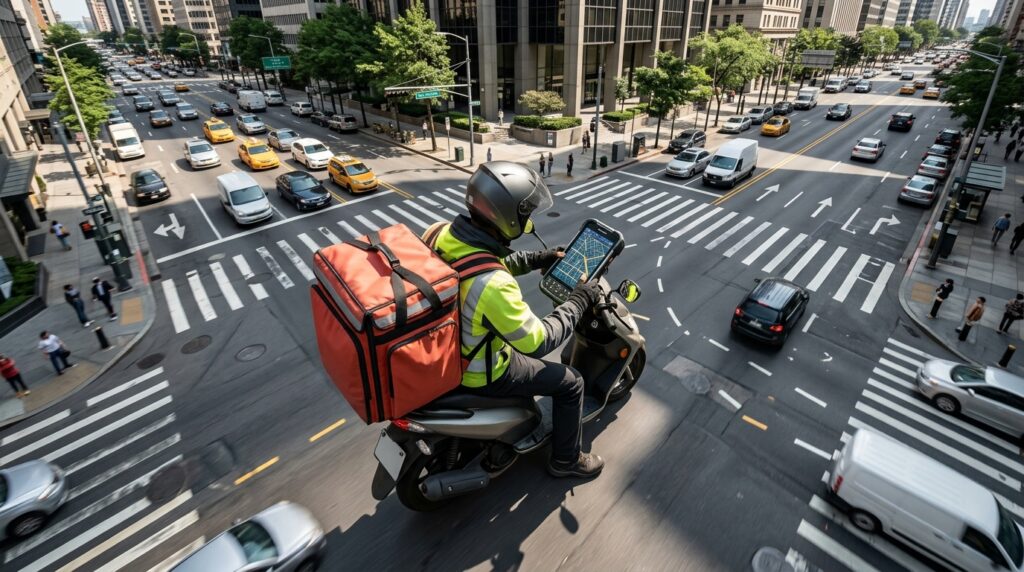
How National Digital Address Systems Are Streamlining Last-Mile Logistics in Developing E-Commerce Markets
In many fast-growing e-commerce marketplaces, the toughest element of a delivery isn’t the shipping, but locating the customer’s door. In Africa, South Asia, the Middle East and Latin America, wide swathes of land are covered in informal settlements, unidentified streets and irregular building numbers. Traditional postal addressing is thus unreliable. Couriers spend hours calling consumers for directions, unsuccessful deliveries accumulate, and online businesses eat the cost with returns and lost trust. National digital address systems are created to resolve this challenge by providing every house, shop and plot with a precise and uniform code that can be read by people and by machines. Governments, postal operators and logistics businesses are now investing in these platforms as part of bigger digital infrastructure ambitions. Understanding how they work, we can see why are becoming a bedrock of efficient last mile delivery.
Limitations of traditional addresses in developing markets
Traditional addresses rely on named streets, numbered houses in sequential order, and reliable postal codes, which are not available in many fast urbanizing places. Neighborhoods tend to grow faster than city planning can keep up, thus residences are tagged only by landmarks like a mosque down the block, a market stall or a certain tree. Drivers are reliant on spoken directions which differ from person to person, leading to misunderstanding, mistaken turns and delayed parcels. Inconsistent spelling and incomplete entries are also caused by free-text address fields on purchasing websites. These weaknesses increase the cost of delivery, reduce the success rate the first time around and dissuade buyers from shopping online. The gap between digital demand and physical addressing is one of the main inhibitors to e-commerce growth in these regions.
The Reality of National Digital Address Systems
Digital address systems assign a unique alphanumeric number to a particular location, typically based on accurate geographical co-ordinates. Some systems split the map into tiny squares of a grid . Others tie each code to a building or property record that has been confirmed . Consumers can receive a code via a mobile app, web portal or SMS service and then present it to retailers at the point of purchase. The code immediately turns into a map pin that navigation software can understand. And because the format is standardized, it has the ability to work offline in some circumstances, and across multiple mapping platforms. This converts an ambiguous description into a precise machine-readable location that any courier can follow without guess work.
Real World Examples in Different Regions
Some countries have already started national programs with tangible results. Ghana rolled out a popular digital address system linked to a mobile app, while Saudi Arabia created a short address system operated by its national postal provider. Other countries have used grid-based or three-word locating systems in areas without street data. Each strategy is tailored to local needs, including language, population density and existing postal infrastructure. Early adopters report enhanced emergency response, simplified utility registration and better support for online retail. These instances illustrate that success is not simply a matter of technology, but also of government support, public awareness and integration with existing service providers. Now their lessons are feeding newer projects abroad.
Less Failed Deliveries & Failed Operating Costs
One of the costliest difficulties in last-mile logistics is the failed first-try delivery because each revisit costs additional fuel, manpower and customer service. A particular digital address eliminates much of the uncertainty that leads to these failures. Drivers can go straight to the proper entry instead of looking around a neighborhood and consumers do not need to guide drivers via phone. Verified addresses can help companies achieve higher first-attempt delivery rates, fewer returns and shorter delivery windows. Savings are especially crucial for small sellers with narrow margins, who can not withstand repeated delivery failures. As time goes by, cheaper costs enable retailers to offer cheaper delivery and expand into previously neglected areas.
Intelligent Route Planning and Fleet Optimization
Good location data goes directly into route optimization software, which needs accurate coordinates to group deliveries and order stops. If addresses are not sure, the algorithms will propose inefficient routes, which waste time and fuel. Standardized digital addresses assist logistics managers to organize dense delivery clusters, anticipate arrival times with more certainty and balance workloads across drivers. Better planning also means fewer emissions and wear on vehicles, aiding sustainability aims. The more valuable real-time tracking gets, the more clients may see an accurate destination and a realistic arrival estimate. Fleet operators that use motorcycles, vans or cargo bikes in crowded cities can see a considerable boost to their daily productivity and service reliability through these benefits.
E-commerce platform and logistics software consolidation.
To be of any real utility, digital addresses need to work easily with online stores and delivery systems. Many systems today have address lookup fields that validate a code at checkout and instantly populate location details and attach coordinates to the order. Warehouse management systems and delivery apps can then read the same data without needing to enter it manually, thanks to application programming interfaces. It avoids typing errors and speeds up processing of orders. Merchants can also employ verified addresses to catch fraud, since inconsistent or non-existent locations are readily obvious. To drive adoption among shops, couriers and customers, smooth integration is critical to strengthen the network effect that adds value to the system over time.
Privacy, data governance and adoption hurdles
The benefits are obvious, but national address systems do pose valid concerns about privacy and data security. A database that connects people to the exact locations of their homes could be exploited if it is not well protected or shared without agreement. Governments must decide who gets to see address data, how long it can be kept and what controls are in place to avoid exploitation. Public trust is also built on transparency and clear, free access for citizens. People without cellphones, knowledge of the program or technological literacy can delay adoption. Successful initiatives include strong legal protections, outreach campaigns, offline options and relationships with local communities to ensure that no one is excluded from the advantages.
The Future of Addressing and Logistics in Developing Markets
As e-commerce grows, digital addressing will certainly become a fundamental layer of national infrastructure, like power or cell connectivity. In the future, systems may be able to interface with drones, autonomous delivery trucks, smart lockers and real-time mapping platforms, providing speedier and more flexible service. Cross-border compatibility could also help international shipping by tying native codes to international standards. As cities evolve, public and commercial partners will have a shared responsibility for ensuring data accuracy. Markets that engage early in dependable addressing will have a competitive advantage, enticing merchants, investors and shoppers who want speedy, predictable delivery wherever they live.