How Canva’s Magic Studio Update Replaces Midjourney for Quick Ad Campaign Storyboarding
How Canva’s Magic Studio Update Replaces Midjourney for Quick Ad Campaign Storyboarding
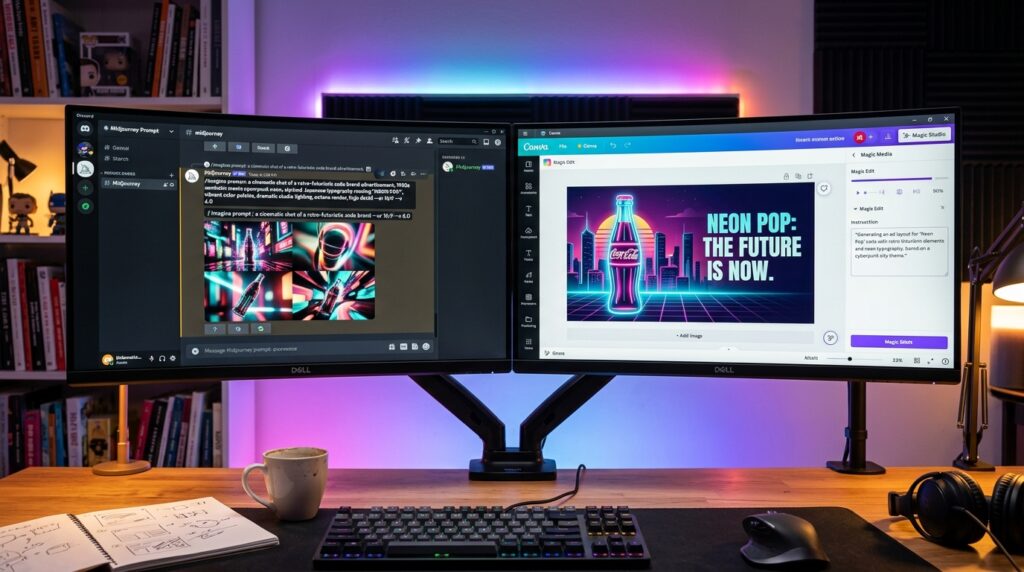
The most recent upgrade to Canva’s Magic Studio is drastically altering the way in which designers and marketers approach quick visual ideation, especially in the context of storyboarding for advertising campaigns. Midjourney and other similar tools have traditionally been used for the purpose of generating high-quality idea graphics by means of text prompts. However, these tools often need the utilisation of external processes, prompt refining, and post-processing. This process is intended to be simplified by the integration of Canva’s Magic Studio, which brings together artificial intelligence-based capabilities for image production, editing, and layout under a single platform. Those advertisers that are working under tight deadlines will see a considerable reduction in production time as a result of this consolidation. Iteration flexibility and speed are two factors that are very beneficial to storyboarding, which is the process of visualising campaign ideas prior to them being executed. The users of Magic Studio are able to develop, modify, and organise graphics without having to transfer between numerous tools to do these tasks. This results in a process that is more effective for the development of advertising ideas. Despite the fact that it may not be able to completely replace specialised equipment in every circumstance, it can provide a useful option for tasks that need a rapid turnaround. The ability to comprehend the influence that this change has on creative operations is very necessary for current marketers. It is a step in the direction of integrated design environments powered by artificial intelligence.
A Comprehensive Understanding of Canva’s Magic Studio Capabilities
Magic Studio combines a number of capabilities that are driven by artificial intelligence, such as the ability to generate images, remove backgrounds, convert text to images, and create smart editing tools. Through the use of these features, users are able to generate graphic assets right inside the interface of Canva. Magic Studio, in contrast to AI technologies that are purchased separately, integrates without any difficulty with design layouts and templates. Because of this, it is much simpler to transform created photographs into marketing materials that can be used. In terms of storyboarding, this indicates that ideas may be visualised and structured in a short amount of time. Having the capability to alter and enhance graphics inside the same environment is a way to improve operations. In order to iterate on ideas, users are not required to export files. This connectivity is a significant benefit for the processes involved in expedited design. It allows for a great simplification of the creative process.
Storyboarding that is both quick and efficient in terms of workflow
The speed with which ideas may be developed and improved is one of the most important advantages that Magic Studio offers. Storyboarding often requires that numerous iterations be completed in order to investigate various creative avenues. Users of Magic Studio are able to develop several iterations of a concept in a matter of minutes. The amount of time spent on manual design work is cut down as a result. Decision-making is improved when one is able to test and alter notions in a short amount of time. When it comes to advertising efforts, speed is very necessary in order to maintain a competitive edge. It is possible for teams to more effectively react to trends and opportunities when they have processes that are faster. Increases in productivity are directly proportional to advances in efficiency. This makes Magic Studio a valuable tool for time-sensitive projects.
Comparing Magic Studio with Midjourney
Midjourney is known for producing highly detailed and artistic images, often with a strong emphasis on visual quality. However, it typically requires external tools for editing and layout integration. Magic Studio, on the other hand, focuses on usability and integration rather than purely artistic output. While the image quality may differ in certain cases, the convenience of an all-in-one platform is a major advantage. For quick ad storyboarding, the ability to generate and arrange visuals in one place is more important than achieving perfect artistic detail. This makes Magic Studio more practical for many use cases. Each tool has its strengths depending on the objective. The choice depends on workflow priorities.
Simplifying Concept Development for Ad Campaigns
Magic Studio simplifies the process of turning ideas into visual concepts. Users can input prompts, generate images, and immediately place them into storyboard layouts. This reduces the gap between ideation and execution. For marketers, this means faster validation of creative ideas. Concepts can be shared with teams or clients quickly for feedback. This accelerates the approval process and reduces delays. Simplified workflows improve collaboration and communication. The ability to visualize ideas clearly enhances decision-making. Concept development becomes more efficient and structured. This is a key benefit for campaign planning.
Reducing Dependency on Multiple Tools
Before integrated solutions like Magic Studio, designers often relied on multiple tools for different stages of the workflow. This included AI generation platforms, image editors, and design software. Managing these tools added complexity and increased production time. Magic Studio reduces this dependency by providing a unified environment. Users can handle generation, editing, and layout within a single platform. This simplifies the workflow and reduces friction. Fewer tools mean fewer compatibility issues and less time spent on file management. Streamlined processes improve overall efficiency. Reducing tool dependency is a major advantage for teams.
Limitations Compared to Specialized AI Tools
Despite its advantages, Magic Studio has limitations compared to specialized tools like Midjourney. The level of artistic detail and customization may not match dedicated AI platforms. Complex or highly specific visual requirements may still require external tools. Additionally, advanced prompt engineering capabilities may be more limited. For high-end creative projects, these differences can be significant. However, for quick storyboarding and concept visualization, these limitations are often acceptable. Understanding these trade-offs helps users choose the right tool for each task. Magic Studio is optimized for speed and convenience rather than perfection. This distinction is important.
Enhancing Collaboration and Team Workflows
Magic Studio supports collaborative workflows by allowing multiple users to work on designs simultaneously. Teams can share storyboards, provide feedback, and make adjustments in real time. This improves communication and reduces delays in the creative process. For ad campaigns, collaboration is essential for aligning ideas and ensuring consistency. The ability to work within a shared environment enhances productivity. It also simplifies version control and asset management. Collaborative features make Magic Studio suitable for team-based projects. Efficient teamwork leads to better outcomes. This is a significant benefit for agencies and marketing teams.
Strategic Use Cases for Replacing Midjourney
Magic Studio is particularly effective for specific use cases where speed and integration are more important than artistic complexity. These include early-stage concept development, rapid prototyping, and internal presentations. For these scenarios, the ability to generate and organize visuals quickly is critical. While Midjourney may still be preferred for high-end visual production, Magic Studio can handle the majority of everyday design needs. Using the right tool for the right task maximizes efficiency. Strategic adoption of Magic Studio can streamline workflows. It provides a practical alternative for many creative processes.