How the EU eIDAS 2.0 Digital Identity Framework Changes Cross-Border Online Verification for European Businesses
How the EU eIDAS 2.0 Digital Identity Framework Changes Cross-Border Online Verification for European Businesses
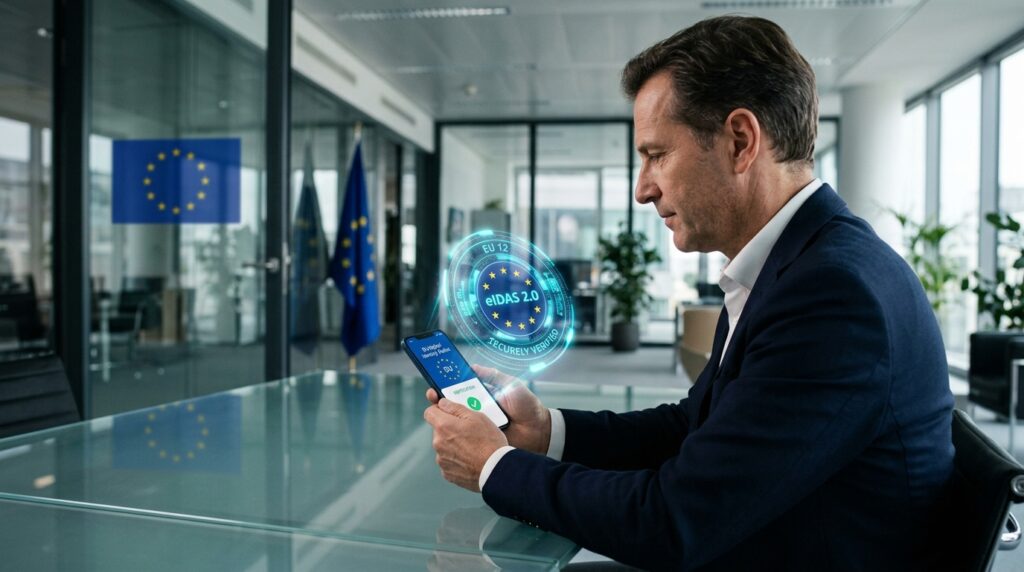
European firms have been hampered for too long by a jigsaw of identity checks which differ from nation to country. When a corporation is onboarding a customer in another member state, it may face various document formats, different trust norms and different legal expectations. This fragmentation will be replaced with an interoperable system based on the European Digital Identity Wallet under the upgraded eIDAS architecture, also known as eIDAS 2.0. Organizations will be able to authenticate people and enterprises through a single technical and legal framework rather than relying on disparate state schemes. That change will effect banks, telecom providers, internet marketplaces, healthcare platforms, or any company that processes regulated client data. Product and compliance teams now need to figure out how the new rules function. Forward-thinking businesses may remove the burden of onboarding, minimize their vulnerability to fraud, and confidently enter new cross-border markets.
What eIDAS 2.0 really changes
The original eIDAS law allowed for member states to register their national electronic identification schemes for cross-border recognition, but uptake was patchy and many persons never got a useable digital identity. The updated framework shifts from voluntary recognition to a formal duty. All member states are required to offer a digital identity wallet for their inhabitants and the wallet must work seamlessly across borders. It also broadens the scope of trust services and provides new categories such as electronic attestation of attributes and electronic ledgers. The practical effect for enterprises is a more predictable verification environment where the same wallet may confirm identity in Paris, Warsaw or Lisbon without extra arrangements.
What is the European Digital Identity Wallet?
Wallet is a secure program, generally on a smartphone, that enables a person to save and present verified identity data and credentials. Items such as a national identity record, a driving license, diploma or professional qualification can be carried by users and shared when needed. The design gives the user flexibility over what information they disclose in each interaction. Selective disclosure means a person can establish they are over a given age without giving away a full date of birth or home location. The idea behind strong device-level security and verified wallet solutions is to keep the data that is stored safe. For a business, this means getting cleaner, cryptographically verifiable information, rather than scanned papers of unknown quality.
Mandatory Acceptance Obligations for Companies
One of the most important modifications is that in certain instances the wallet has to be accepted. Public sector bodies will have to accept it and private firms that are compelled by law to utilize strong user authentication, such as those in banking, transport, energy and telecommunications, will also have to support it. Very large online platforms must permit users to authenticate with the wallet when the user so wishes. These duties will be rolled in as the national wallet implementation occurs therefore enterprises should start mapping their authentication channels now. Companies that don’t risk regulatory scrutiny and a less than optimal customer experience as opposed to competitors that can integrate seamlessly.
Cross-Border Customers Made Easy to Onboard
For companies with multi-country consumers, onboarding has typically been cumbersome, expensive and abandoned. Manual document review, video ID and specific nation checks all add expense and delay. Wallet-based verification allows a consumer in one member state to authenticate their identity to a provider in another member state using the same trusted credentials. Know-your-customer processes can be speedier because the data has already been verified by an authoritative issuer. Financial firms in particular can profit from the use of high-assurance identification data in client due diligence. The outcome is fewer drop-offs, less time to activate and a more uniform record of compliance across markets.
Qualified Trust Services & Legal Certainty
The framework provides an increased role for qualified trust services, e.g. qualified electronic signatures, seals, timestamps and website authentication certificates. In every member state, a qualified electronic signature has the same legal impact as a handwritten signature, and the wallet is designed to make it much easier to create one. Qualified signatures can be used by natural persons through the wallet free of charge for non-professional uses, thus lowering the barrier to digital contracts. New certified services like as electronic archiving and remote signature creation devices administration widen the scope of services that businesses may rely on. This legal certainty helps to decrease disagreements on the authenticity of documents and allows for genuinely paperless workflows across borders.
Business Credentials and Electronic Credentials Attributes
eIDAS 2.0 goes beyond simple identity and offers electronic attestations of attributes, i.e. digital declarations about a person or an organization – for example a qualification, a licence to operate or proof of residence. The most legally effective are qualified versions, which are to be recognized across the Union. This is particularly beneficial in regulated sectors where a transaction requires checks on professional credentials or authorizations. These attestations can also be used by companies to validate the authorization of a representative signing on behalf of another organization. Such credentials could eventually replace much manual paperwork exchange in procurement, recruitment and supplier onboarding.
Privacy, Data Protection and Security Issues
The framework is designed to be compatible with European data protection regulations with privacy by design as a key premise. * Any business that uses wallet data must disclose what data they aim to obtain and why, and must only request data that is essential for that purpose. Users can identify authorized requesters and avoid the danger of over-collection and impersonation by registering relying parties. The wallet architecture is designed to limit tracking, so providers should not expect that they will be able to correlate a user’s activities across services without consent. Organizations will need to reassess their data minimization strategies, retention policies and security controls to meet these expectations and prevent compliance gaps.
Getting Your Business Ready for the Switch
Preparation should start with an analysis of present identity verification and authentication processes to determine where wallet acceptance will be needed or 2 helpful. Technical teams must stay abreast of changing implementation standards and test integration against new pilot wallet solutions. Legal and compliance workers have to work out how existing contracts, privacy notifications and risk assessments will alter. Careful planning of user experience also helps, because clients would choose a simple and trustworthy verification trip. Companies lacking internal knowledge can speed readiness by partnering with certified trust service providers. Those that act now will be in a better position to turn a regulatory obligation into a long-term advantage in the European digital market.