Understanding the W3C Web Merchant Payment API Standard and Its Impact on One-Click E-Commerce Checkouts
Understanding the W3C Web Merchant Payment API Standard and Its Impact on One-Click E-Commerce Checkouts
Online shopping has far outstripped the checkout experience that makes it work. Buyers still have to type long card numbers, billing addresses and shipping information onto forms that fluctuate from store to store, and many give up before paying. The W3C online payments standards, centered on the Payment Request API, are designed to solve this by providing a consistent way for browsers to collect and deliver payment data to merchants. Rather than each website needing to build its own form, the browser offers a familiar, secure place to populate saved information in seconds. This is a big deal for developers, store owners, payment providers, and everyone responsible for conversion rates. While mobile commerce remains the dominant force, it is increasingly important to understand how this standard operates. Adopting merchants can decrease friction, increase security and deliver the speedy one-click checkout shoppers now expect.
What the W3C Payment Standard is Meant to Do
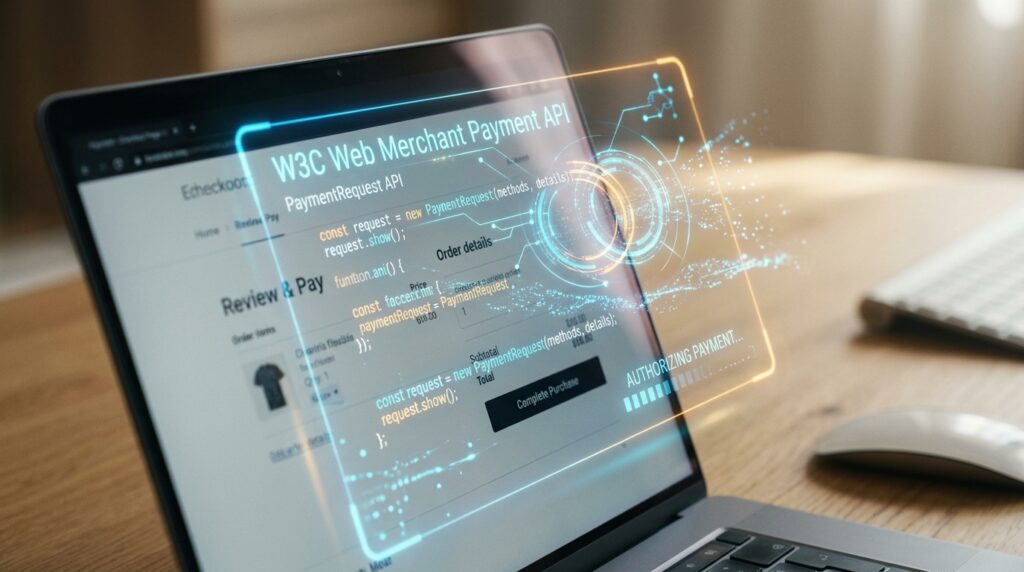
The W3C web payments specifications define a common, browser-based way to initiate and process online payments. The Payment Request API lets a merchant site specify what it is buying, how much it will cost and what payment methods it takes. The browser then handles the interaction, presenting the customer with a native payment sheet rather than a custom web form. This separation allows the merchant to focus on the buying experience, while the browser takes care of the entering of sensitive data. The open, vendor neutral standard works with different browsers, devices and payment providers. The aim is not to replace payment processors, but to standardize the front end of the transaction so that checkout becomes predictable, secure and substantially faster for everyone involved.
How the Payment Request Flow Works in Practice
The shopper will often initiate a transaction by clicking a pay button on the product or cart page. The site generates a payment request, including order details and supported payment methods, and asks the browser to show the payment interface. The consumer evaluates the amount, selects a saved card or wallet, checks shipping info if needed, and validates the transaction using a fingerprint, facial scan or device passcode. The browser sends the encrypted payment response back to the merchant, who then sends it to a payment service provider for processing. The merchant never has to fill out a long form or deal with raw card entry. This streamlined sequence frequently turns a multi-step checkout into a single tap, which is the core of the modern one-click buying experience.
How One-Click Checkout Increases Conversion Rates
A difficult checkout process is one of the key reasons why cart abandonment still remains one of the biggest challenges in e-commerce. Mobile users are particularly prone to abandoning a task when faced with lots of fields on a small screen. The standard pre-fills payment and address information, eliminating the most unpleasant aspects of the purchasing journey. More speed implies less opportunities for distraction, second-guessing or keystroke errors that lead to refused payments. Merchants often report improved conversion rates, faster checkout times and better repeat purchase behavior after rolling out optimized payment routines. The greatest benefit is for returning clients, who have their saved details available immediately. For merchants operating on razor-thin margins, even a little boost in checkout completion can imply a significant bump in revenue over time.
Benefits of Reduced Fraud Exposure and Security
Security is a key argument for implementing a standardized payment interface. Since the browser has to enter sensitive data, retailers don’t have to handle as much card information, which can help simplify compliance with industry security rules. Payment methods utilized via the API commonly use tokenization, which replaces the real card number with a token that might be single use or device unique, and is meaningless if intercepted. Biometric or device credential authentication provides an additional barrier to stolen card use. Associated capabilities like Secure Payment Confirmation support strict consumer authentication needs in several areas. Taken together, these features minimize the danger of data breaches and fraudulent transactions. A smaller attack surface means the firm and its consumers are protected, and that’s what online stores built their trust on.
Payment Handlers and Support for Flexible Payment Methods
The ecosystem around the standard is more than one API. The Payment Handler API enables payment providers to register their own web-based payment apps with the browser, allowing customers to pay with the services they trust. This means that a merchant can accept cards, digital wallets, bank transfers and local payment methods, all with a single, consistent connection. Payment method IDs explain what each option says, leaving opportunity for the system to develop when new financial items arrive. This flexibility is useful for merchants who sell worldwide because buyers in various nations have varied preferred ways to pay. Familiar checkout options build trust and reduce drop-offs. This open design also promotes competition among payment providers, perhaps resulting in improved functionality and lower processing costs.
Implementation Considerations for Developers and Merchants
The standard is quite easy to implement, but it still requires a fair amount of forethought. Developers will have to design code that initiates payment requests, deals with the user’s responses, and gracefully falls back to a regular checkout form if the browser or device doesn’t support it. Depending on the feature availability and style of the payment sheet, it’s vital to test across different browsers and mobile platforms. It is also important that teams work with their payment service provider to validate the payment methods and tokens they support. Clear error handling, precise order totals, and well-placed pay buttons are all part of a smooth experience. Many e-commerce platforms and plugins now come with built-in support, which can reduce the technical barrier for smaller companies that lack dedicated engineering personnel.
Mobile Commerce, Accessibility, User Experience
Most internet purchasing is now done on phones, and the standard is well suited to that context. Native payment sheets are touch optimized, load quickly and are responsive to multiple screen widths, no custom styling work required. They also benefit from accessibility capabilities built into the operating system and browser, like screen reader support and constant focus behavior. This enables shoppers with impairments a more dependable way to buy than many hand-built checkout forms. A consistent design allows customers to identify a genuine payment prompt, increasing trust. The standard combines speed, familiarity and inclusive design to enhance the shopping experience and lessen the effort to buy, especially for individuals shopping on the move.
Future of Web Payments and Checkout Innovation
The way money transfers online is changing all the time as browsers, banks and tech companies improve web payment standards. Work is underway to improve authentication, support for recurring payments and interaction with open banking and digital identity wallets. As these elements combine, checkout can be practically transparent, with verification running silently in the background as the buyer merely acknowledges the purchase. Merchants adopting the standard today will be better prepared to take advantage of these developments without having to overhaul their systems. Regulators and industry groups are also focusing more on a standardized, safe payment experience, which might further boost adoption. Standardized one-click checkout is eventually going to be the default expectation, not a competitive advantage.